Published July 15, 2026
The Hidden Benefits of Air Purification for Your Seattle Residence

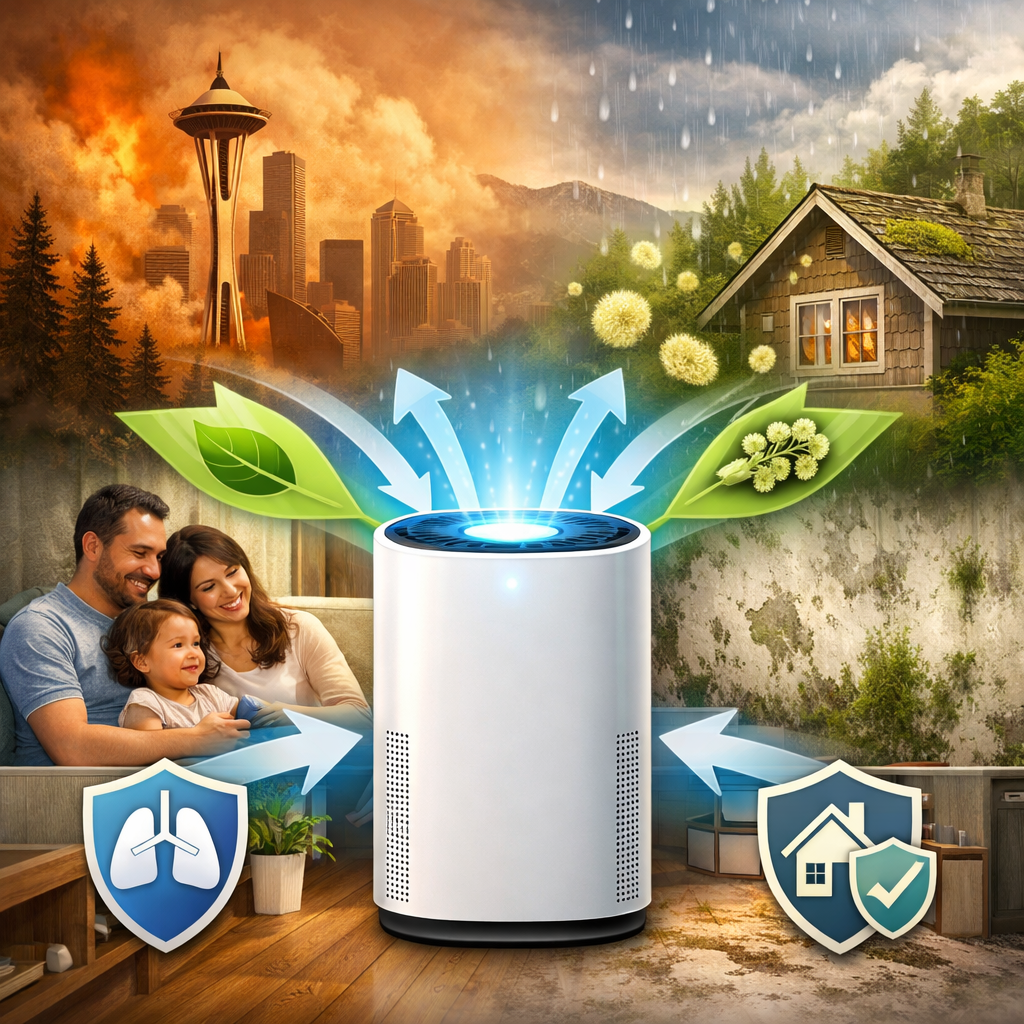
If you live in Seattle, you already know the city has a complicated relationship with its air. One month you're enjoying crisp, rain-washed skies; the next, wildfire smoke from Eastern Washington or British Columbia is rolling in and turning the horizon a hazy orange. Add in the region's near-constant humidity, the mold spores that thrive in damp basements, and the pollen bursts that hit every spring, and it becomes clear that Seattle homes face a unique set of air quality challenges.
Many homeowners think of air purifiers as a seasonal fix, something you plug in when the smoke alerts start rolling across your phone. But the real value of air purification goes far beyond a few smoky weeks in August. When you understand the full scope of what a good indoor air quality system can do, you start to see it less as a gadget and more as a long term investment in your health, your home, and your peace of mind.
This article breaks down the hidden benefits of air purification for Seattle residences, from protecting your family's respiratory health to preserving the structure of your home itself.
1. Protection Against Seattle's Unique Air Quality Threats
Seattle's geography and climate create a specific cocktail of airborne irritants that many other cities simply don't deal with in the same way.
Wildfire smoke has become an almost yearly event for the Pacific Northwest. Even when fires burn hundreds of miles away, smoke particles travel and settle into the atmosphere, and these fine particulates (known as PM2.5) are small enough to penetrate deep into the lungs. Standard windows and doors do not block these particles effectively, which means outdoor smoke can seep indoors even when everything is closed up.
Moisture and mold spores are another persistent issue. Seattle's famous rainy season, combined with older housing stock that wasn't always built with modern ventilation in mind, creates ideal conditions for mold growth in basements, crawl spaces, and bathrooms. Mold spores are microscopic and easily become airborne, circulating through your home's air long before you notice a visible patch on the wall.
Seasonal pollen from alder, cedar, and grass pollinates aggressively in spring and early summer, and the mild, wet winters mean allergy season can start earlier and last longer than in drier climates.
A quality air purification system, especially one using a true HEPA filter, is designed to capture these fine particles, whether they come from smoke, mold spores, or pollen, before they have a chance to circulate through your living space. This isn't just about comfort; it's about actively reducing your exposure to substances that are known to trigger asthma attacks, allergic reactions, and long term respiratory issues.
2. Real Health Benefits That Go Beyond Allergies
It's easy to assume that air purifiers are mainly for people with allergies or asthma, but the health benefits extend to nearly everyone in the household, including people who don't consider themselves sensitive to airborne irritants at all.
Indoor air can actually be more polluted than outdoor air, sometimes by a significant margin. This happens because modern homes are built to be energy efficient, which often means they are tightly sealed. While this is great for your heating bill, it also means that pollutants generated indoors, like cooking fumes, cleaning product vapors, pet dander, and dust, have nowhere to go. They simply recirculate.
Over time, exposure to these trapped pollutants has been linked to headaches, fatigue, irritated eyes and throat, and worsened respiratory conditions. Children, older adults, and anyone with a compromised immune system are particularly vulnerable to these effects.
Air purifiers work continuously to reduce these indoor contaminants. Many modern units combine a HEPA filter with an activated carbon layer, which is particularly effective at absorbing odors and volatile organic compounds (VOCs) released by paint, furniture, and household cleaners. The result is air that not only looks and smells cleaner but is measurably lower in the particles most likely to affect your health.
For families with young children, this matters even more. Children breathe faster than adults relative to their body size, meaning they take in proportionally more air, and therefore more pollutants, over the course of a day. Investing in air purification is one practical way to reduce that exposure during the years when their lungs and immune systems are still developing.
3. Protecting Your Home's Structure and Value
The benefits of air purification aren't limited to what you breathe; they extend to the physical condition of your home as well.
Excess moisture in the air, common in Seattle's damp climate, contributes to mold growth not just in visible areas but within walls, insulation, and other hidden spaces. Left unchecked, this can lead to costly structural repairs and a decline in your home's overall value. While air purifiers alone don't control humidity the way a dehumidifier does, many advanced systems work alongside your HVAC setup to reduce airborne mold spores before they settle and colonize new areas of your home.
Dust accumulation is another quiet, long term issue. Dust isn't just an annoyance to wipe off shelves; it settles into your home's ventilation system over time, and if it isn't addressed, it forces your heating and cooling system to work harder, driving up energy costs and shortening the lifespan of your equipment. Reducing airborne dust with a purifier means less buildup throughout your home's air pathways, which can extend the life of your HVAC system and reduce how often you need professional air duct cleaning.
There's also a resale consideration. Homes with documented air quality systems, especially ones that address regional concerns like smoke and moisture, are increasingly appealing to buyers who are aware of the Pacific Northwest's environmental challenges. It's a subtle but real value add when it comes time to sell.
4. Better Sleep, Sharper Focus, and Everyday Comfort
It's easy to overlook the more immediate, day to day benefits of cleaner air because they build up gradually rather than announcing themselves all at once.
Poor air quality has a documented connection to sleep disruption. When your bedroom air is loaded with dust, pet dander, or lingering odors, it can contribute to nasal congestion, throat irritation, and restless sleep, even if you don't wake up consciously aware of why. Many people who add a purifier to their bedroom report falling asleep faster and waking up feeling more rested, simply because their airway isn't working overtime to filter out irritants all night.
Air quality also affects cognitive performance. Studies on indoor environments have shown that higher concentrations of CO2 and airborne pollutants correlations.
Then there's the simple matter of comfort. A purifier reduces cooking odors, pet smells, and the musty scent that can develop in older homes during Seattle's wetter months. Guests notice the difference, and so will you, especially after returning home from a smoky or pollen heavy day outdoors.
Conclusion: Cleaner Air Starts with One Decision
Seattle's natural beauty comes with a few environmental trade-offs, from wildfire smoke drifting in from distant forests to the persistent dampness that defines the region's winters. While you can't control the weather or the fire season, you absolutely can control the quality of the air inside your own home.
Air purification offers benefits that stretch far beyond simply making a room smell fresher. It protects your family from fine particulates and allergens, reduces your exposure to indoor pollutants that build up silently over time, helps preserve your home's structure and value, and even improves how well you sleep and think each day. These are not small, seasonal perks; they are meaningful, cumulative improvements to your quality of life.
Many homeowners think of air purifiers as a seasonal fix, something you plug in when the smoke alerts start rolling across your phone. But the real value of air purification goes far beyond a few smoky weeks in August. When you understand the full scope of what a good indoor air quality system can do, you start to see it less as a gadget and more as a long term investment in your health, your home, and your peace of mind.
This article breaks down the hidden benefits of air purification for Seattle residences, from protecting your family's respiratory health to preserving the structure of your home itself.
1. Protection Against Seattle's Unique Air Quality Threats
Seattle's geography and climate create a specific cocktail of airborne irritants that many other cities simply don't deal with in the same way.Wildfire smoke has become an almost yearly event for the Pacific Northwest. Even when fires burn hundreds of miles away, smoke particles travel and settle into the atmosphere, and these fine particulates (known as PM2.5) are small enough to penetrate deep into the lungs. Standard windows and doors do not block these particles effectively, which means outdoor smoke can seep indoors even when everything is closed up.
Moisture and mold spores are another persistent issue. Seattle's famous rainy season, combined with older housing stock that wasn't always built with modern ventilation in mind, creates ideal conditions for mold growth in basements, crawl spaces, and bathrooms. Mold spores are microscopic and easily become airborne, circulating through your home's air long before you notice a visible patch on the wall.
Seasonal pollen from alder, cedar, and grass pollinates aggressively in spring and early summer, and the mild, wet winters mean allergy season can start earlier and last longer than in drier climates.
A quality air purification system, especially one using a true HEPA filter, is designed to capture these fine particles, whether they come from smoke, mold spores, or pollen, before they have a chance to circulate through your living space. This isn't just about comfort; it's about actively reducing your exposure to substances that are known to trigger asthma attacks, allergic reactions, and long term respiratory issues.
2. Real Health Benefits That Go Beyond Allergies
It's easy to assume that air purifiers are mainly for people with allergies or asthma, but the health benefits extend to nearly everyone in the household, including people who don't consider themselves sensitive to airborne irritants at all.Indoor air can actually be more polluted than outdoor air, sometimes by a significant margin. This happens because modern homes are built to be energy efficient, which often means they are tightly sealed. While this is great for your heating bill, it also means that pollutants generated indoors, like cooking fumes, cleaning product vapors, pet dander, and dust, have nowhere to go. They simply recirculate.
Over time, exposure to these trapped pollutants has been linked to headaches, fatigue, irritated eyes and throat, and worsened respiratory conditions. Children, older adults, and anyone with a compromised immune system are particularly vulnerable to these effects.
Air purifiers work continuously to reduce these indoor contaminants. Many modern units combine a HEPA filter with an activated carbon layer, which is particularly effective at absorbing odors and volatile organic compounds (VOCs) released by paint, furniture, and household cleaners. The result is air that not only looks and smells cleaner but is measurably lower in the particles most likely to affect your health.
For families with young children, this matters even more. Children breathe faster than adults relative to their body size, meaning they take in proportionally more air, and therefore more pollutants, over the course of a day. Investing in air purification is one practical way to reduce that exposure during the years when their lungs and immune systems are still developing.
3. Protecting Your Home's Structure and Value
The benefits of air purification aren't limited to what you breathe; they extend to the physical condition of your home as well.Excess moisture in the air, common in Seattle's damp climate, contributes to mold growth not just in visible areas but within walls, insulation, and other hidden spaces. Left unchecked, this can lead to costly structural repairs and a decline in your home's overall value. While air purifiers alone don't control humidity the way a dehumidifier does, many advanced systems work alongside your HVAC setup to reduce airborne mold spores before they settle and colonize new areas of your home.
Dust accumulation is another quiet, long term issue. Dust isn't just an annoyance to wipe off shelves; it settles into your home's ventilation system over time, and if it isn't addressed, it forces your heating and cooling system to work harder, driving up energy costs and shortening the lifespan of your equipment. Reducing airborne dust with a purifier means less buildup throughout your home's air pathways, which can extend the life of your HVAC system and reduce how often you need professional air duct cleaning.
There's also a resale consideration. Homes with documented air quality systems, especially ones that address regional concerns like smoke and moisture, are increasingly appealing to buyers who are aware of the Pacific Northwest's environmental challenges. It's a subtle but real value add when it comes time to sell.
4. Better Sleep, Sharper Focus, and Everyday Comfort
It's easy to overlook the more immediate, day to day benefits of cleaner air because they build up gradually rather than announcing themselves all at once.Poor air quality has a documented connection to sleep disruption. When your bedroom air is loaded with dust, pet dander, or lingering odors, it can contribute to nasal congestion, throat irritation, and restless sleep, even if you don't wake up consciously aware of why. Many people who add a purifier to their bedroom report falling asleep faster and waking up feeling more rested, simply because their airway isn't working overtime to filter out irritants all night.
Air quality also affects cognitive performance. Studies on indoor environments have shown that higher concentrations of CO2 and airborne pollutants correlations.
If you live in Seattle, you already know the city has a complicated relationship with its air. One month you're enjoying crisp, rain-washed skies; the next, wildfire smoke from Eastern Washington or British Columbia is rolling in and turning the horizon a hazy orange. Add in the region's near-constant humidity, the mold spores that thrive in damp basements, and the pollen bursts that hit every spring, and it becomes clear that Seattle homes face a unique set of air quality challenges.
Many homeowners think of air purifiers as a seasonal fix, something you plug in when the smoke alerts start rolling across your phone. But the real value of air purification goes far beyond a few smoky weeks in August. When you understand the full scope of what a good indoor air quality system can do, you start to see it less as a gadget and more as a long term investment in your health, your home, and your peace of mind.
This article breaks down the hidden benefits of air purification for Seattle residences, from protecting your family's respiratory health to preserving the structure of your home itself.
1. Protection Against Seattle's Unique Air Quality Threats
Seattle's geography and climate create a specific cocktail of airborne irritants that many other cities simply don't deal with in the same way.
Wildfire smoke has become an almost yearly event for the Pacific Northwest. Even when fires burn hundreds of miles away, smoke particles travel and settle into the atmosphere, and these fine particulates (known as PM2.5) are small enough to penetrate deep into the lungs. Standard windows and doors do not block these particles effectively, which means outdoor smoke can seep indoors even when everything is closed up.
Moisture and mold spores are another persistent issue. Seattle's famous rainy season, combined with older housing stock that wasn't always built with modern ventilation in mind, creates ideal conditions for mold growth in basements, crawl spaces, and bathrooms. Mold spores are microscopic and easily become airborne, circulating through your home's air long before you notice a visible patch on the wall.
Seasonal pollen from alder, cedar, and grass pollinates aggressively in spring and early summer, and the mild, wet winters mean allergy season can start earlier and last longer than in drier climates.
A quality air purification system, especially one using a true HEPA filter, is designed to capture these fine particles, whether they come from smoke, mold spores, or pollen, before they have a chance to circulate through your living space. This isn't just about comfort; it's about actively reducing your exposure to substances that are known to trigger asthma attacks, allergic reactions, and long term respiratory issues.
2. Real Health Benefits That Go Beyond Allergies
It's easy to assume that air purifiers are mainly for people with allergies or asthma, but the health benefits extend to nearly everyone in the household, including people who don't consider themselves sensitive to airborne irritants at all.
Indoor air can actually be more polluted than outdoor air, sometimes by a significant margin. This happens because modern homes are built to be energy efficient, which often means they are tightly sealed. While this is great for your heating bill, it also means that pollutants generated indoors, like cooking fumes, cleaning product vapors, pet dander, and dust, have nowhere to go. They simply recirculate.
Over time, exposure to these trapped pollutants has been linked to headaches, fatigue, irritated eyes and throat, and worsened respiratory conditions. Children, older adults, and anyone with a compromised immune system are particularly vulnerable to these effects.
Air purifiers work continuously to reduce these indoor contaminants. Many modern units combine a HEPA filter with an activated carbon layer, which is particularly effective at absorbing odors and volatile organic compounds (VOCs) released by paint, furniture, and household cleaners. The result is air that not only looks and smells cleaner but is measurably lower in the particles most likely to affect your health.
For families with young children, this matters even more. Children breathe faster than adults relative to their body size, meaning they take in proportionally more air, and therefore more pollutants, over the course of a day. Investing in air purification is one practical way to reduce that exposure during the years when their lungs and immune systems are still developing.
3. Protecting Your Home's Structure and Value
The benefits of air purification aren't limited to what you breathe; they extend to the physical condition of your home as well.
Excess moisture in the air, common in Seattle's damp climate, contributes to mold growth not just in visible areas but within walls, insulation, and other hidden spaces. Left unchecked, this can lead to costly structural repairs and a decline in your home's overall value. While air purifiers alone don't control humidity the way a dehumidifier does, many advanced systems work alongside your HVAC setup to reduce airborne mold spores before they settle and colonize new areas of your home.
Dust accumulation is another quiet, long term issue. Dust isn't just an annoyance to wipe off shelves; it settles into your home's ventilation system over time, and if it isn't addressed, it forces your heating and cooling system to work harder, driving up energy costs and shortening the lifespan of your equipment. Reducing airborne dust with a purifier means less buildup throughout your home's air pathways, which can extend the life of your HVAC system and reduce how often you need professional air duct cleaning.
There's also a resale consideration. Homes with documented air quality systems, especially ones that address regional concerns like smoke and moisture, are increasingly appealing to buyers who are aware of the Pacific Northwest's environmental challenges. It's a subtle but real value add when it comes time to sell.
4. Better Sleep, Sharper Focus, and Everyday Comfort
It's easy to overlook the more immediate, day to day benefits of cleaner air because they build up gradually rather than announcing themselves all at once.
Poor air quality has a documented connection to sleep disruption. When your bedroom air is loaded with dust, pet dander, or lingering odors, it can contribute to nasal congestion, throat irritation, and restless sleep, even if you don't wake up consciously aware of why. Many people who add a purifier to their bedroom report falling asleep faster and waking up feeling more rested, simply because their airway isn't working overtime to filter out irritants all night.
Air quality also affects cognitive performance. Studies on indoor environments have shown that higher concentrations of CO2 and airborne pollutants correlate with reduced concentration, slower decision making, and increased mental fatigue. For anyone working from home, an increasingly common reality for many Seattle residents, cleaner air in your workspace can translate directly into sharper focus and better productivity throughout the day.
Then there's the simple matter of comfort. A purifier reduces cooking odors, pet smells, and the musty scent that can develop in older homes during Seattle's wetter months. Guests notice the difference, and so will you, especially after returning home from a smoky or pollen heavy day outdoors.
Conclusion: Cleaner Air Starts with One Decision
Seattle's natural beauty comes with a few environmental trade-offs, from wildfire smoke drifting in from distant forests to the persistent dampness that defines the region's winters. While you can't control the weather or the fire season, you absolutely can control the quality of the air inside your own home.
Air purification offers benefits that stretch far beyond simply making a room smell fresher. It protects your family from fine particulates and allergens, reduces your exposure to indoor pollutants that build up silently over time, helps preserve your home's structure and value, and even improves how well you sleep and think each day. These are not small, seasonal perks; they are meaningful, cumulative improvements to your quality of life.
With reduced concentration, slower decision making, and increased mental fatigue. For anyone working from home, an increasingly common reality for many Seattle residents, cleaner air in your workspace can translate directly into sharper focus and better productivity throughout the day.Many homeowners think of air purifiers as a seasonal fix, something you plug in when the smoke alerts start rolling across your phone. But the real value of air purification goes far beyond a few smoky weeks in August. When you understand the full scope of what a good indoor air quality system can do, you start to see it less as a gadget and more as a long term investment in your health, your home, and your peace of mind.
This article breaks down the hidden benefits of air purification for Seattle residences, from protecting your family's respiratory health to preserving the structure of your home itself.
1. Protection Against Seattle's Unique Air Quality Threats
Seattle's geography and climate create a specific cocktail of airborne irritants that many other cities simply don't deal with in the same way.Wildfire smoke has become an almost yearly event for the Pacific Northwest. Even when fires burn hundreds of miles away, smoke particles travel and settle into the atmosphere, and these fine particulates (known as PM2.5) are small enough to penetrate deep into the lungs. Standard windows and doors do not block these particles effectively, which means outdoor smoke can seep indoors even when everything is closed up.
Moisture and mold spores are another persistent issue. Seattle's famous rainy season, combined with older housing stock that wasn't always built with modern ventilation in mind, creates ideal conditions for mold growth in basements, crawl spaces, and bathrooms. Mold spores are microscopic and easily become airborne, circulating through your home's air long before you notice a visible patch on the wall.
Seasonal pollen from alder, cedar, and grass pollinates aggressively in spring and early summer, and the mild, wet winters mean allergy season can start earlier and last longer than in drier climates.
A quality air purification system, especially one using a true HEPA filter, is designed to capture these fine particles, whether they come from smoke, mold spores, or pollen, before they have a chance to circulate through your living space. This isn't just about comfort; it's about actively reducing your exposure to substances that are known to trigger asthma attacks, allergic reactions, and long term respiratory issues.
2. Real Health Benefits That Go Beyond Allergies
It's easy to assume that air purifiers are mainly for people with allergies or asthma, but the health benefits extend to nearly everyone in the household, including people who don't consider themselves sensitive to airborne irritants at all.Indoor air can actually be more polluted than outdoor air, sometimes by a significant margin. This happens because modern homes are built to be energy efficient, which often means they are tightly sealed. While this is great for your heating bill, it also means that pollutants generated indoors, like cooking fumes, cleaning product vapors, pet dander, and dust, have nowhere to go. They simply recirculate.
Over time, exposure to these trapped pollutants has been linked to headaches, fatigue, irritated eyes and throat, and worsened respiratory conditions. Children, older adults, and anyone with a compromised immune system are particularly vulnerable to these effects.
Air purifiers work continuously to reduce these indoor contaminants. Many modern units combine a HEPA filter with an activated carbon layer, which is particularly effective at absorbing odors and volatile organic compounds (VOCs) released by paint, furniture, and household cleaners. The result is air that not only looks and smells cleaner but is measurably lower in the particles most likely to affect your health.
For families with young children, this matters even more. Children breathe faster than adults relative to their body size, meaning they take in proportionally more air, and therefore more pollutants, over the course of a day. Investing in air purification is one practical way to reduce that exposure during the years when their lungs and immune systems are still developing.
3. Protecting Your Home's Structure and Value
The benefits of air purification aren't limited to what you breathe; they extend to the physical condition of your home as well.Excess moisture in the air, common in Seattle's damp climate, contributes to mold growth not just in visible areas but within walls, insulation, and other hidden spaces. Left unchecked, this can lead to costly structural repairs and a decline in your home's overall value. While air purifiers alone don't control humidity the way a dehumidifier does, many advanced systems work alongside your HVAC setup to reduce airborne mold spores before they settle and colonize new areas of your home.
Dust accumulation is another quiet, long term issue. Dust isn't just an annoyance to wipe off shelves; it settles into your home's ventilation system over time, and if it isn't addressed, it forces your heating and cooling system to work harder, driving up energy costs and shortening the lifespan of your equipment. Reducing airborne dust with a purifier means less buildup throughout your home's air pathways, which can extend the life of your HVAC system and reduce how often you need professional air duct cleaning.
There's also a resale consideration. Homes with documented air quality systems, especially ones that address regional concerns like smoke and moisture, are increasingly appealing to buyers who are aware of the Pacific Northwest's environmental challenges. It's a subtle but real value add when it comes time to sell.
4. Better Sleep, Sharper Focus, and Everyday Comfort
It's easy to overlook the more immediate, day to day benefits of cleaner air because they build up gradually rather than announcing themselves all at once.Poor air quality has a documented connection to sleep disruption. When your bedroom air is loaded with dust, pet dander, or lingering odors, it can contribute to nasal congestion, throat irritation, and restless sleep, even if you don't wake up consciously aware of why. Many people who add a purifier to their bedroom report falling asleep faster and waking up feeling more rested, simply because their airway isn't working overtime to filter out irritants all night.
Air quality also affects cognitive performance. Studies on indoor environments have shown that higher concentrations of CO2 and airborne pollutants correlate with reduced concentration, slower decision making, and increased mental fatigue. For anyone working from home, an increasingly common reality for many Seattle residents, cleaner air in your workspace can translate directly into sharper focus and better productivity throughout the day.
Then there's the simple matter of comfort. A purifier reduces cooking odors, pet smells, and the musty scent that can develop in older homes during Seattle's wetter months. Guests notice the difference, and so will you, especially after returning home from a smoky or pollen heavy day outdoors.
Conclusion: Cleaner Air Starts with One Decision
Seattle's natural beauty comes with a few environmental trade-offs, from wildfire smoke drifting in from distant forests to the persistent dampness that defines the region's winters. While you can't control the weather or the fire season, you absolutely can control the quality of the air inside your own home.Air purification offers benefits that stretch far beyond simply making a room smell fresher. It protects your family from fine particulates and allergens, reduces your exposure to indoor pollutants that build up silently over time, helps preserve your home's structure and value, and even improves how well you sleep and think each day. These are not small, seasonal perks; they are meaningful, cumulative improvements to your quality of life.
Then there's the simple matter of comfort. A purifier reduces cooking odors, pet smells, and the musty scent that can develop in older homes during Seattle's wetter months. Guests notice the difference, and so will you, especially after returning home from a smoky or pollen heavy day outdoors.
Conclusion: Cleaner Air Starts with One Decision
Seattle's natural beauty comes with a few environmental trade-offs, from wildfire smoke drifting in from distant forests to the persistent dampness that defines the region's winters. While you can't control the weather or the fire season, you absolutely can control the quality of the air inside your own home.Air purification offers benefits that stretch far beyond simply making a room smell fresher. It protects your family from fine particulates and allergens, reduces your exposure to indoor pollutants that build up silently over time, helps preserve your home's structure and value, and even improves how well you sleep and think each day. These are not small, seasonal perks; they are meaningful, cumulative improvements to your quality of life.